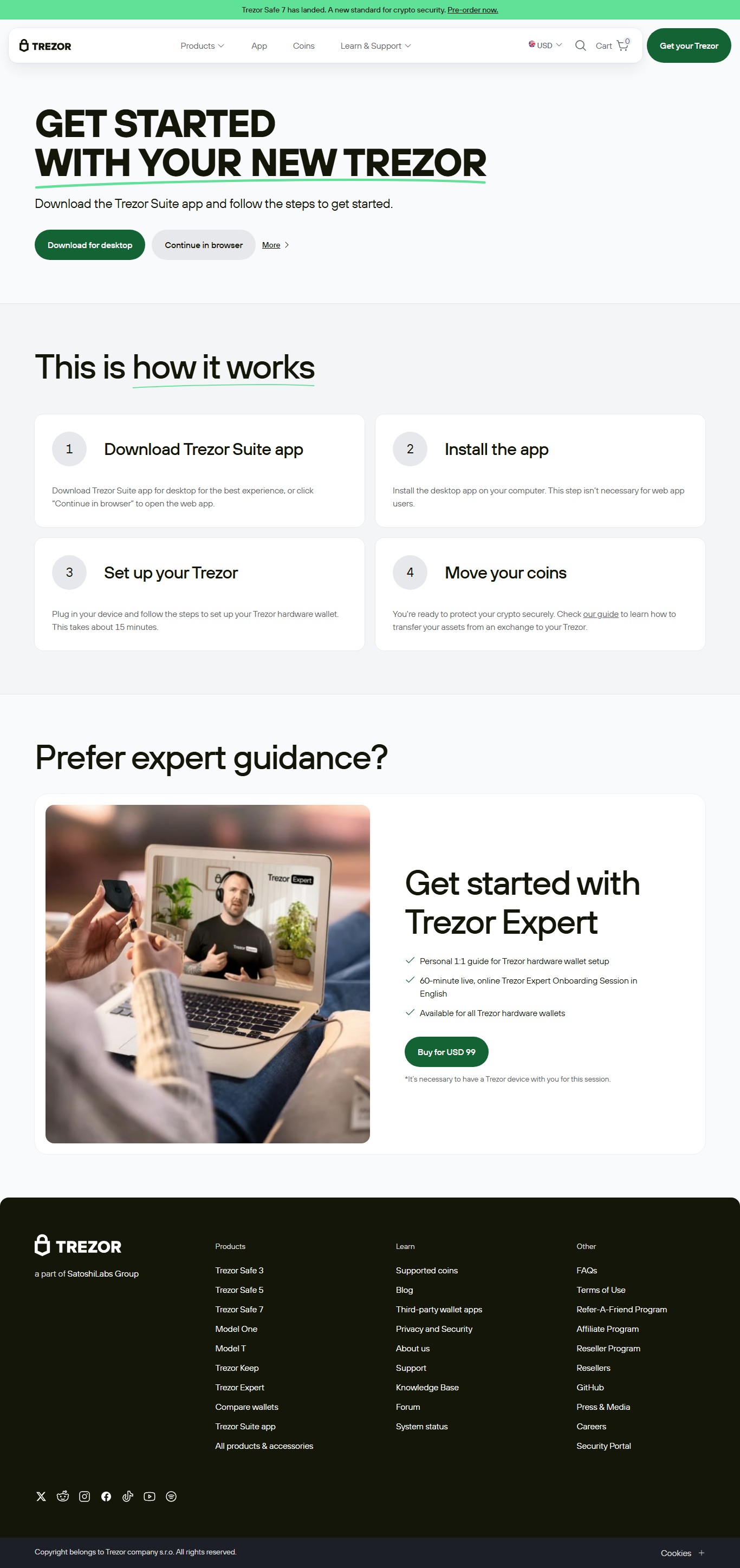
Trezor.io/Start: Understanding the Hidden Risks and How to Stay Safe
Hardware wallets are built for safety — but even the most secure system has potential pitfalls. Let’s explore the risks around using trezor.io/Start and how you can outsmart them.
🧭 A Reality Check for 2025 Trezor Users
Trezor’s ecosystem remains among the safest in crypto, but evolving cyber threats demand smarter habits and awareness. Here’s what every user should know before setting up their wallet at trezor.io/Start.
1. The Myth of Perfect Security
Many newcomers believe that buying a hardware wallet instantly makes them “unhackable.” In truth, Trezor.io/Start provides an incredibly secure foundation — but the real vulnerability often lies between the keyboard and the screen. Social engineering, phishing, and counterfeit websites continue to target users who aren’t alert.
Understanding that security is layered is key. Your device, firmware, browser, and habits all contribute to a safe crypto journey.
2. Phishing and Clone Websites
One of the biggest threats in 2025 isn’t malware — it’s cloned websites pretending to be trezor.io/Start. These fraudulent pages often look pixel-perfect, even using SSL certificates to appear legitimate.
Once inside a fake site, attackers may prompt users to enter their recovery seed or direct them to install malicious firmware. Trezor will never ask for your recovery phrase online.
3. Supply Chain and Device Tampering Risks
Another risk arises before you even visit the site. Hardware wallets can be compromised if purchased from unauthorized resellers. Tampered devices may contain altered firmware or hidden memory chips designed to capture seed data.
“Your crypto’s first defense is the authenticity of your device — not just its password.”
Trezor combats this with holographic seals, tamper-evident packaging, and verification steps during setup. At trezor.io/Start, you’ll now see a device authenticity check prompt verifying your hardware’s integrity before proceeding.
4. Firmware Risks and the Importance of Updates
Outdated firmware is a silent weakness. In 2025, Trezor introduced its modular firmware protection system — an architecture that isolates sensitive cryptographic processes from the user interface layer. However, these protections only apply if you’re running the latest version.
Checklist Before Updating:
- Ensure the update is initiated via Trezor Suite or trezor.io/Start.
- Never install firmware files shared on forums or Discord channels.
- Verify the update signature; unauthorized files will trigger a warning.
5. Recovery Seed Vulnerabilities
Your recovery seed is your lifeline — and your greatest risk. No online tool, website, or app should ever request it. The trezor.io/Start setup page now includes new educational banners reminding users that your seed never leaves the offline world.
Unfortunately, attackers often trick users through fake “verification” requests. Always confirm that any interaction involving your device takes place through the official Trezor Suite interface only.
6. The Human Factor – Complacency and Convenience
Technology can only protect you to a point. Many users compromise themselves through shortcuts: skipping passphrases, reusing PINs, or connecting their wallets to unverified computers.
Most Common User Errors:
- Disabling the PIN for “quick access.”
- Saving recovery words on a cloud document.
- Plugging the device into public computers.
- Ignoring update prompts in Trezor Suite.
To mitigate this, Trezor’s 2025 onboarding flow now includes a “Security Quiz” before setup completion — helping users understand key safety rules through short, interactive prompts.
7. Browser Extension and Malware Risks
Malicious browser extensions have become a leading attack vector. Extensions claiming to manage crypto addresses or track portfolio prices can inject code that redirects transactions. Trezor Suite’s new “secure bridge” architecture isolates data from browser APIs, neutralizing most of these attacks.
Still, users should stay alert:
- Use browsers like Brave or Firefox with minimal add-ons.
- Disable clipboard monitoring extensions.
- Keep antivirus and firmware synced with Trezor Suite updates.
8. Comparing Trezor’s Risk Profile vs Other Wallets
| Aspect | Trezor.io/Start (2025) | Ledger | Metamask |
|---|---|---|---|
| Open Source | ✅ Fully | ❌ Closed | ✅ Partial |
| Seed Handling | Offline Only | Encrypted SE | Browser-Linked |
| Firmware Transparency | Community Audited | Restricted | N/A |
| User Error Mitigation | Guided Setup + Quiz | Automated | Manual |
9. Frequently Asked Questions
Q1: Can malware infect my Trezor device?
No, not directly. Malware can’t access private keys stored inside the hardware. However, it can trick users into confirming malicious transactions on-screen — always verify every detail before pressing confirm.
Q2: Is it safe to use public Wi-Fi during setup?
Preferably not. While Trezor Suite encrypts data locally, setting up in a private, secure network minimizes any risk of traffic interception.
Q3: How often should I update firmware?
Check trezor.io/Start monthly. New versions patch vulnerabilities and optimize compatibility for supported cryptocurrencies.
Q4: Should I use a passphrase in addition to PIN?
Yes. A passphrase adds a “25th word” to your seed — creating hidden wallets that only open when the passphrase is entered correctly.
Final Takeaway
The risks surrounding trezor.io/Start aren’t about device flaws — they’re about human habits, counterfeit websites, and negligence. In 2025, security is no longer just hardware-deep; it’s behavioral. Stay alert, stay updated, and your Trezor will remain what it’s meant to be — a vault of absolute trust in your own hands.